Where the Pool Actually Goes: How Siting Gets Decided on a Real Brentwood Lot
Pool placement looks simple on a rendering and gets complicated the moment a crew walks the actual yard.
September 9, 2026 · 3 min read
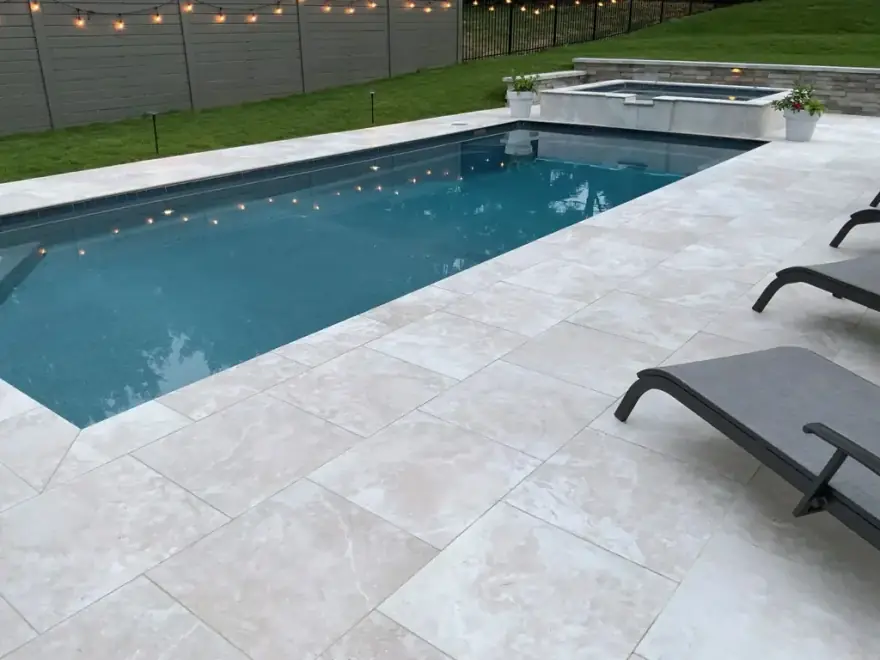
Every homeowner who calls about a pool already has a spot in mind, usually the flattest, sunniest patch of grass in the backyard. Sometimes that spot is exactly right. Just as often, the real answer ends up somewhere else once a builder actually walks the lot, checks the grade, and thinks through how equipment gets in and how water moves after a storm. Siting a pool is less about picking a pretty view and more about working through a short list of real, physical factors that don't show up on a rendering.
Grade comes first
Before anything else, a builder is reading the slope of the yard. A pool needs a level base to sit on, so a sloped lot usually means cutting into the high side and building up or retaining the low side, and how much of that is needed changes the whole footprint and cost of the project. In Middle Tennessee's rolling terrain, especially on a Brentwood or Franklin lot backing up to a wooded ridge, the natural grade rarely runs perfectly flat from the house to the property line. Reading that slope early, before a shape or shell is even picked, avoids redesigning the layout later once the excavator opens the ground and finds something different than expected.
Where the water goes when it's not in the pool
Drainage is the factor most homeowners don't think about until the first hard rain after the pool is finished. A yard that used to shed water naturally toward a low corner or the street can behave completely differently once a pool, patio, and pavilion have changed the grade and added hard surface. A good design plans for where runoff goes before construction starts, not after, working the drainage into the same grading plan as the pool itself rather than treating it as an afterthought. Clay-heavy soil, common across greater Nashville, holds water longer than sandy ground, which makes getting this part of the plan right even more important.
Getting the equipment in without wrecking the yard
A gunite pool needs a shooting crew and heavy equipment on site for excavation and construction, and a fiberglass shell has to be lifted or driven in whole. Both need a real path from the street to the build area wide enough for that equipment, and on a lot with mature trees, a narrow side yard, or a steep driveway, that path isn't always obvious. Part of siting the pool is figuring out how to get equipment back there without tearing up landscaping that's staying, damaging a fence line, or routing trucks across a septic field or utility easement. It's a practical constraint that can move a pool's location as much as the view does.
Sun, shade, and what the tree canopy is doing
Where the sun actually falls on a yard through the day matters more than most people expect. A pool tucked under a mature oak canopy might look shaded and pleasant on a summer afternoon, but that same canopy drops leaves and debris into the water for months and can affect how warm the pool stays. Williamson County and Nashville-area lots often carry significant tree cover, and part of the design conversation is deciding which trees stay as shade and privacy screening around the new outdoor space, and which ones need to come out to get real sun on the water. The same thinking applies to how the pool reads from inside the house, lining it up with the windows and rooms where the family actually spends time rather than hiding it around a corner.
From first concept drawing to final sign-off
Once the site work is settled, the process moves from concept to construction: a design drawing that shows the pool, spa, patio, and any structures in relation to the house and property lines, then excavation, shell construction, decking, equipment installation, and landscaping, all coordinated as one project rather than staged crews working independently. Your builder pulls the necessary permits for the work and the local building department inspects at the required stages before the pool is signed off and filled for good. Allin Landscaping manages that whole sequence for backyard investments across greater Nashville, Brentwood, Franklin, and Williamson County, from the first concept drawing through final construction, as a Licensed General Contractor with the State of Tennessee.
Allin Landscaping, (615) 351-5776
Call (615) 351-5776More articles
Gunite or Fiberglass: Choosing a Pool Shell That Fits Your Nashville Backyard
Two proven ways to build a pool, and how the decision actually plays out on a Middle Tennessee lot.
Louvered Roof, Pavilion, Screened Porch, or Sunroom: Picking the Right Cover for Your Outdoor Room
Four different ways to cover an outdoor room, and how weather, bugs, and how you actually use the space should decide between them.